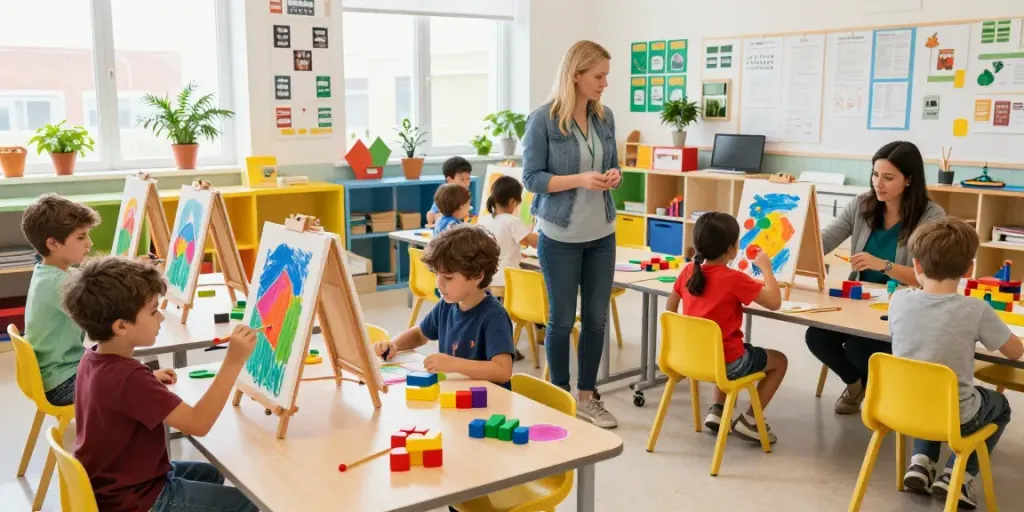
Understanding the Role of Maths Tutors
Maths tutors play an essential role in a student’s educational journey, providing support that often extends beyond mere homework help. They offer personalized guidance, enabling students to grasp complex mathematical concepts and nurture a deeper understanding of the subject. When exploring options, Maths tutors bring a wealth of knowledge and various teaching strategies that cater to individual learning styles. With the increasing focus on personalized education, the importance of qualified maths tutors has never been more prominent.
What to Expect from Maths Tutors?
When working with a maths tutor, you can expect a tailored approach to learning that emphasizes your child’s specific needs. Tutors assess a student’s strengths and weaknesses, creating a supportive environment that fosters confidence. Regular assessments and feedback help track progress, ensuring that students not only understand mathematical concepts but can also apply them effectively.
Benefits of Personalized Tutoring
- Custom Learning Plans: Tutors develop customized lesson plans that align with a student's curriculum and learning pace.
- Improved Understanding: One-on-one attention allows tutors to clarify concepts that may confuse the student in a classroom setting.
- Boost in Confidence: As students grasp challenging topics, their confidence in their math abilities grows significantly.
Key Attributes of Effective Maths Tutors
Successful maths tutors share several key attributes that enhance their effectiveness:
- Strong Communication Skills: The ability to explain complex concepts clearly is vital.
- Patience: An effective tutor must be patient and willing to revisit topics until the student fully understands.
- Adaptability: Great tutors can adjust their teaching methods based on the student’s learning style.
Identifying Your Child’s Learning Style
Understanding how your child learns best is crucial to maximizing the effectiveness of their tutoring sessions. Different learning styles dictate how students absorb information, and recognizing these preferences can lead to enhanced academic performance.
Visual Learners: How Tutors Can Help
Visual learners benefit from the use of diagrams, mind maps, and visual aids. Effective tutors incorporate these tools to illustrate mathematical concepts and provide visual representations of problems, helping visual learners connect abstract ideas with tangible examples.
Auditory Learners: Engagement Techniques
For auditory learners, discussions and verbal explanations are key. Tutors can implement engaging dialogue, encouraging students to verbalize their thought processes. This strategy helps reinforce learning through auditory methods, making complex topics more accessible.
Kinesthetic Learners: Hands-on Approaches
Kinesthetic learners thrive on movement and hands-on activities. Tutors who incorporate physical activities, like using manipulatives or real-world applications of math, can capture the attention of these learners and facilitate a deeper understanding of mathematical principles.
Common Challenges Students Face in Maths
Many students grapple with various challenges in maths that can hinder their progress. By identifying and addressing these issues, tutors can implement effective strategies for improvement.
Identifying Math Anxiety and Its Effects
Math anxiety is a prevalent issue that affects students’ performance. Tutors can help by fostering a positive mindset towards math. Techniques such as relaxation exercises and gradual exposure to challenging problems can significantly reduce anxiety levels.
Addressing Learning Gaps with Personalization
Students may experience learning gaps due to varied educational backgrounds. A personalized approach allows tutors to pinpoint specific areas where students struggle and provide targeted exercises to fill these gaps, ensuring a solid foundation in mathematics.
Overcoming Misconceptions about Math
Misconceptions can lead to long-lasting difficulties in math. Tutors can help students confront these misunderstandings through various methods, including real-life examples, to demonstrate why certain mathematical principles hold true. This approach not only clarifies confusion but also builds a stronger mathematical framework.
Effective Tutoring Techniques and Approaches
Effective tutoring goes beyond traditional methods. Innovative techniques can enhance learning and engagement, making sessions more productive and enjoyable.
Using Technology to Enhance Learning
Incorporating technology into tutoring sessions can make learning more interactive. Online resources, educational apps, and digital tools can provide students with additional practice and instant feedback, allowing them to learn at their own pace.
Incorporating Real-life Examples in Tutoring
Applying maths to real-life situations can greatly enhance understanding. Tutors can illustrate how mathematical concepts are used in everyday life, which makes learning relevant and interesting for students.
Progress Tracking and Feedback Loops
Regular assessments and feedback are crucial in a tutoring environment. Effective tutors utilize progress tracking tools to identify areas of strength and those needing improvement, allowing for a continuous feedback loop that adapts to the student’s evolving needs.
Future Trends in Maths Tutoring
As the educational landscape continues to evolve, so too does the field of maths tutoring. Staying ahead of trends can help students benefit from the best available resources and teaching methods.
Embracing Online Tutoring Platforms
Online tutoring platforms are becoming increasingly popular, allowing students to connect with tutors from around the globe. This flexibility not only provides access to a more extensive pool of qualified tutors but also facilitates learning in a comfortable, familiar environment for students.
The Role of Artificial Intelligence in Tutoring
Artificial intelligence is set to revolutionize the tutoring space. AI-driven tools can offer personalized learning experiences, adapt to student needs in real-time, and provide tailored resources that enhance learning outcomes. This technology has the potential to change how maths is taught and learned significantly.
Predictions for 2026 and Beyond
The future of maths tutoring will likely see continued integration of technology and personalized teaching strategies. As educational tools become more sophisticated, we can expect greater customization of learning experiences, ensuring that each student can thrive in their mathematical studies.
How to Choose the Right Maths Tutor?
Choosing the right maths tutor involves considering several factors. Look for qualifications, teaching styles, and compatibility with your child’s learning needs. It’s essential to select someone who not only possesses strong mathematical knowledge but also can connect with your child on a personal level.
What Qualifications Should Maths Tutors Have?
Effective maths tutors typically hold relevant qualifications. This may include a degree in mathematics or education, alongside experience in tutoring. Additionally, certifications in teaching methods can enhance a tutor’s efficacy, ensuring they are equipped with the latest strategies to support student learning.
How Can Parents Support Their Child’s Learning?
Parents play a vital role in their child’s educational journey. By fostering a positive attitude toward maths, providing a conducive learning environment, and maintaining open communication with the tutor, parents can significantly enhance their child’s learning experience and success in mathematics.